Work: From Blog to Lab: How Leovative Grew Into an Innovation Practice at Leo Burnett
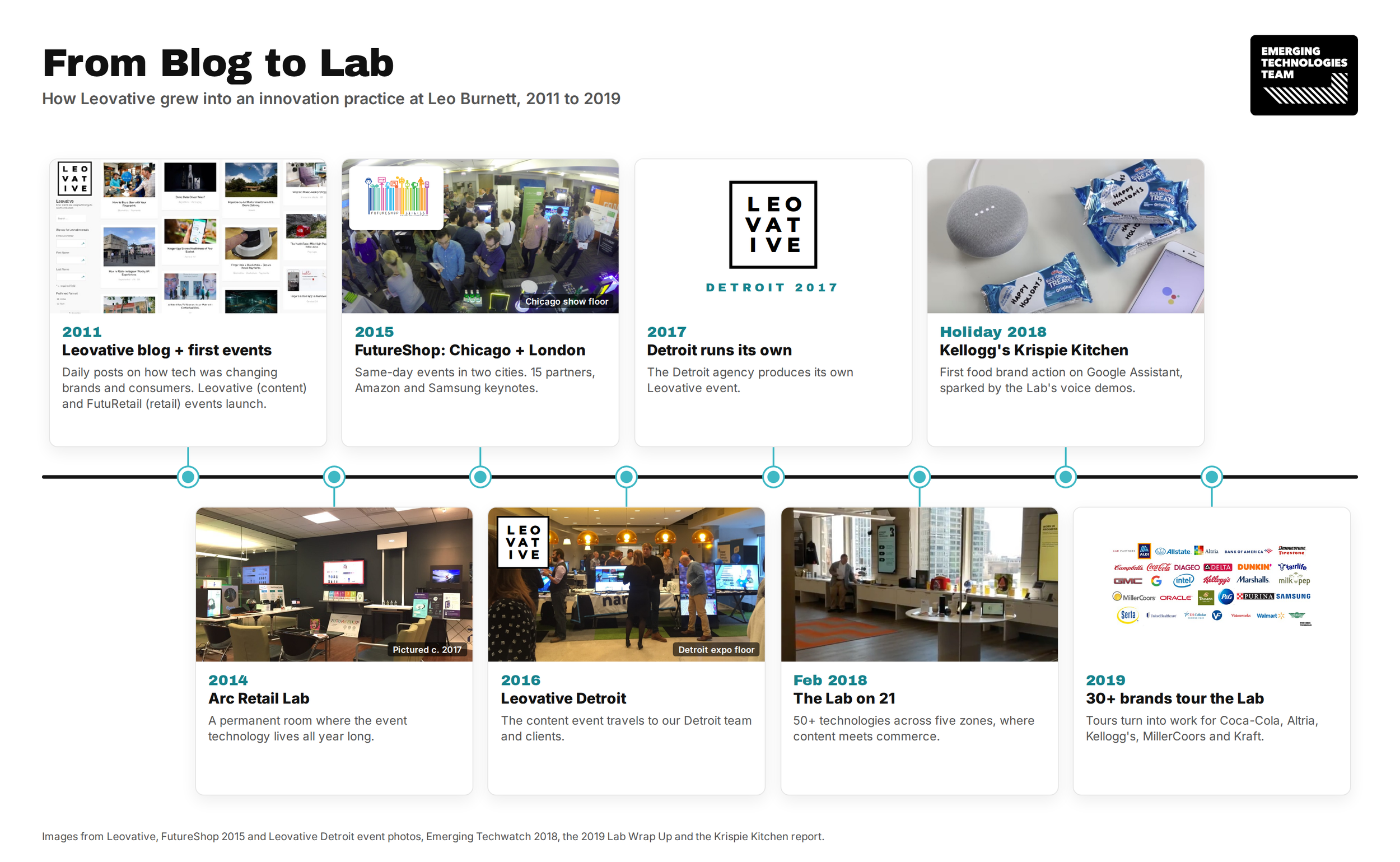
Most innovation programs start with a big launch and a mandate from the top. Ours started with a blog and an idea I believed in. Between 2011 and 2019, I grew a small side project at Leo Burnett and Arc Worldwide into a funded innovation practice. First came a daily blog. Then came events twice a year, then a retail lab, and finally a full innovation lab that won new work for the agency. The lab was the goal from day one. It just took time to get there.
Step 1: The Leovative Blog (2011)
I started Leovative in 2011 as part of the first innovation event I produced at the agency. The idea was simple. Post an update every day on how technology was changing the relationship between brands and consumers. That could be a new retail concept, a smart package, a voice experience, or a store that felt more like a showroom than a place to buy things.
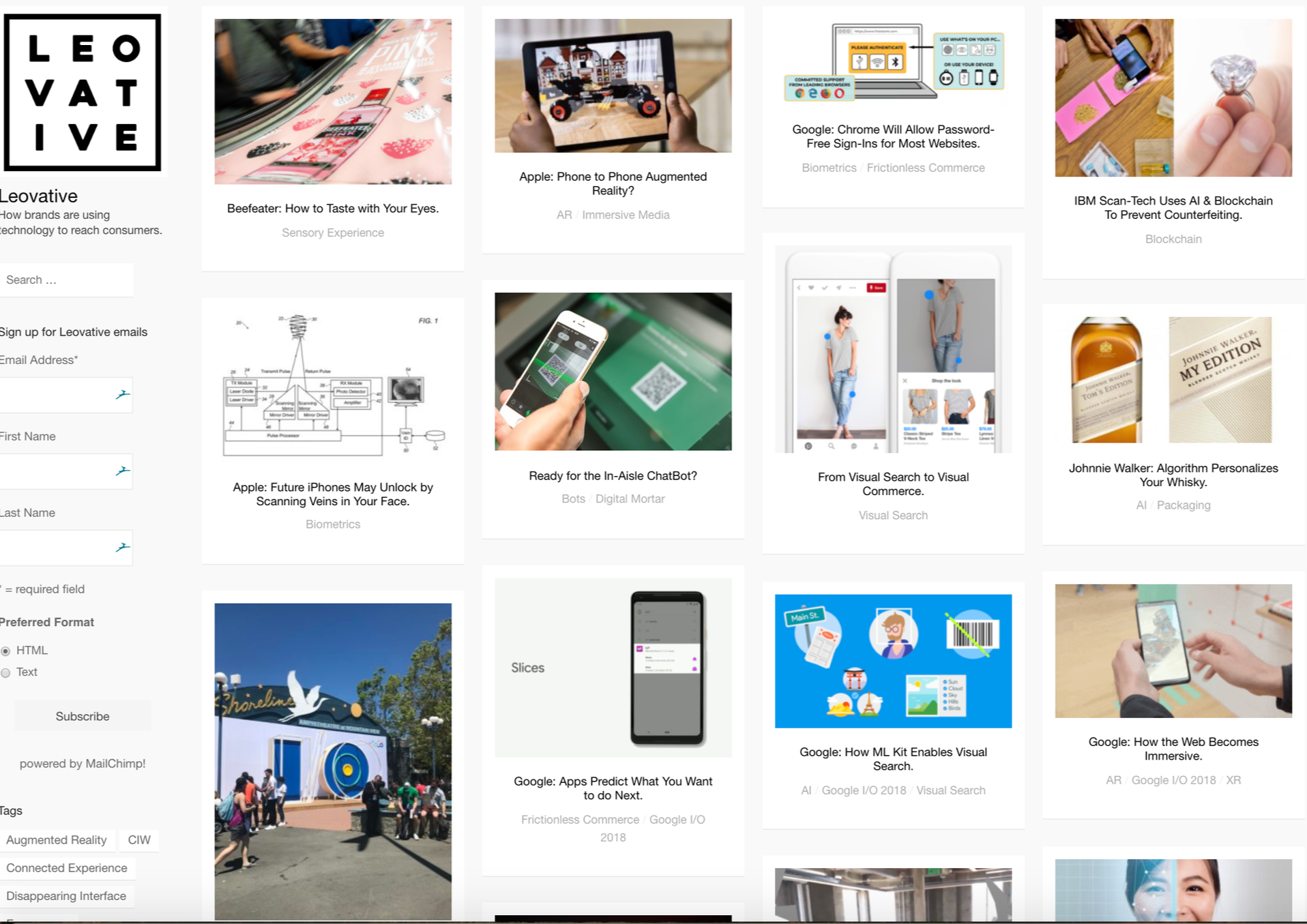
The Leovative site: eight years of daily posts on how brands were using technology to reach people in new ways.
Over time it became a newsletter, sent two to four times a week to clients and to our offices around the world. It ran for more than eight years. Near the end, our UK team was testing Leovative content in Marcel, Publicis Groupe's internal platform, with plans to bring it to North America. The blog did two things for us. It kept the agency looking around the corner. It also gave us a steady stream of material for everything that came next.
Step 2: The Events (2011 onward)
The blog led to live events. We produced two a year:
Leovative: the content event, named after the blog
FutuRetail: the retail event
FutuRetail turned out to be the stronger of the two, and it became the one clients asked about.
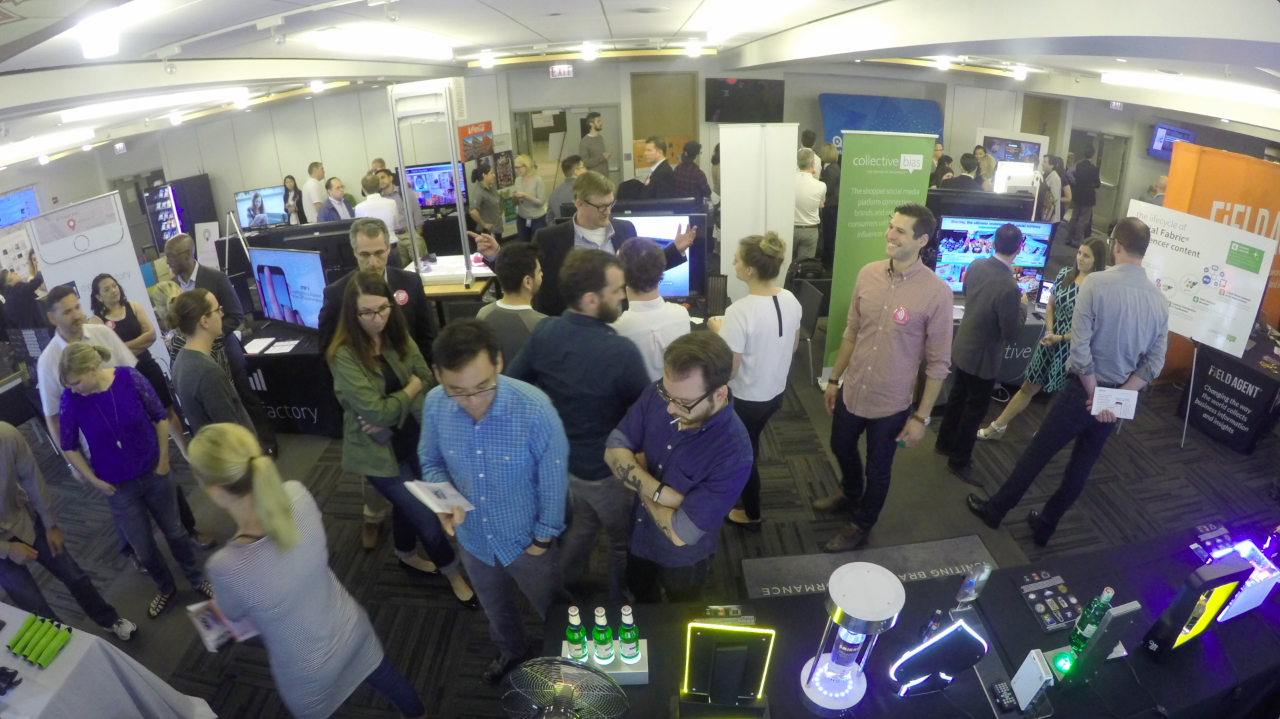
FutureShop 2015 in Chicago: clients, partners and agency teams on the expo floor, the same day we ran the event in London.
Step 3: The Arc Retail Lab (2014)
After a few years of FutuRetail events, one thing was clear. Clients wanted to see and touch the technology any time, not just on event day. So in 2014 we built the Arc Retail Lab, a permanent room where the retail technology from our events and our blog could live all year long.
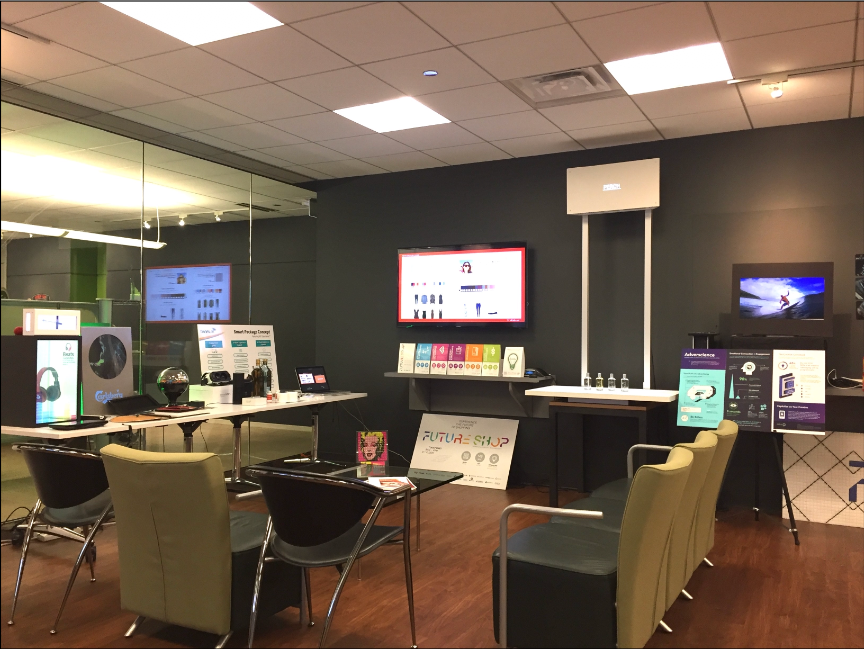
The Arc Retail Lab, circa 2017: a permanent home for the retail technology from our events, open to clients all year long.
It became our testing ground. We could show a client a smart shelf or an NFC tag on a package instead of just describing it. We also started building our own prototypes there.
Step 4: The Events Travel (2015 to 2017)
The events kept growing alongside the lab. In 2015 we renamed FutuRetail to FutureShop to put the focus on the shopper, and we took it global. We held FutureShop in Chicago and London on the same day, June 11, 2015. The London event was at the Vinyl Factory in Soho.
The FutureShop 2015 logo: a barcode made of shoppers and devices, dated 11·6·15 for the same-day events in Chicago and London.
Here's what the London day included:
15 technology partners on an expo floor, each chosen to fit a single theme: how brands can reduce friction and connect with shoppers through the five senses
Keynotes from Amazon and Samsung
A round of "20x20" talks, where each partner had 20 slides at 20 seconds a slide
An Arc zone showing our "Me Commerce" approach to shopper marketing, including shoppable video from Smartzer and touch-screen tables from Media Zest
About 60 clients and prospects, 120 agency staff, and 25 press and industry guests
Across both cities, the #futureshop2015 hashtag had more than 300 mentions and over 700,000 views. One agency leader summed up the day this way: "Arc really demonstrated its competitive advantage yesterday and our clients took notice."
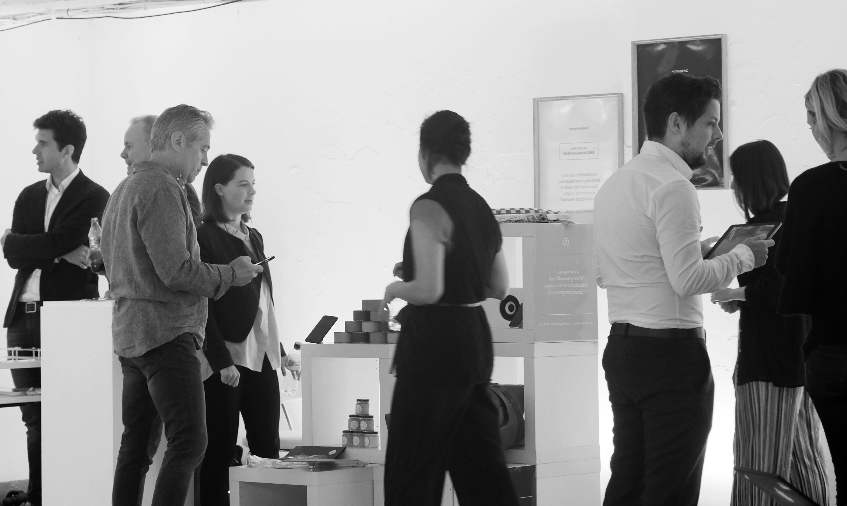
FutureShop London, 2015: Provenance founder Jessi Baker and fashion and lifestyle expert Neliana Fuenmayor demo tools for supply chain transparency at the Vinyl Factory. Photo: Provenance
The content side traveled too. In 2016 I produced a Leovative event in Detroit, bringing the same format to our team and clients there. The next year, the Detroit agency produced its own Leovative event without us. That was one of the clearest signs the program was working. It had become something other teams wanted to run for their own clients.
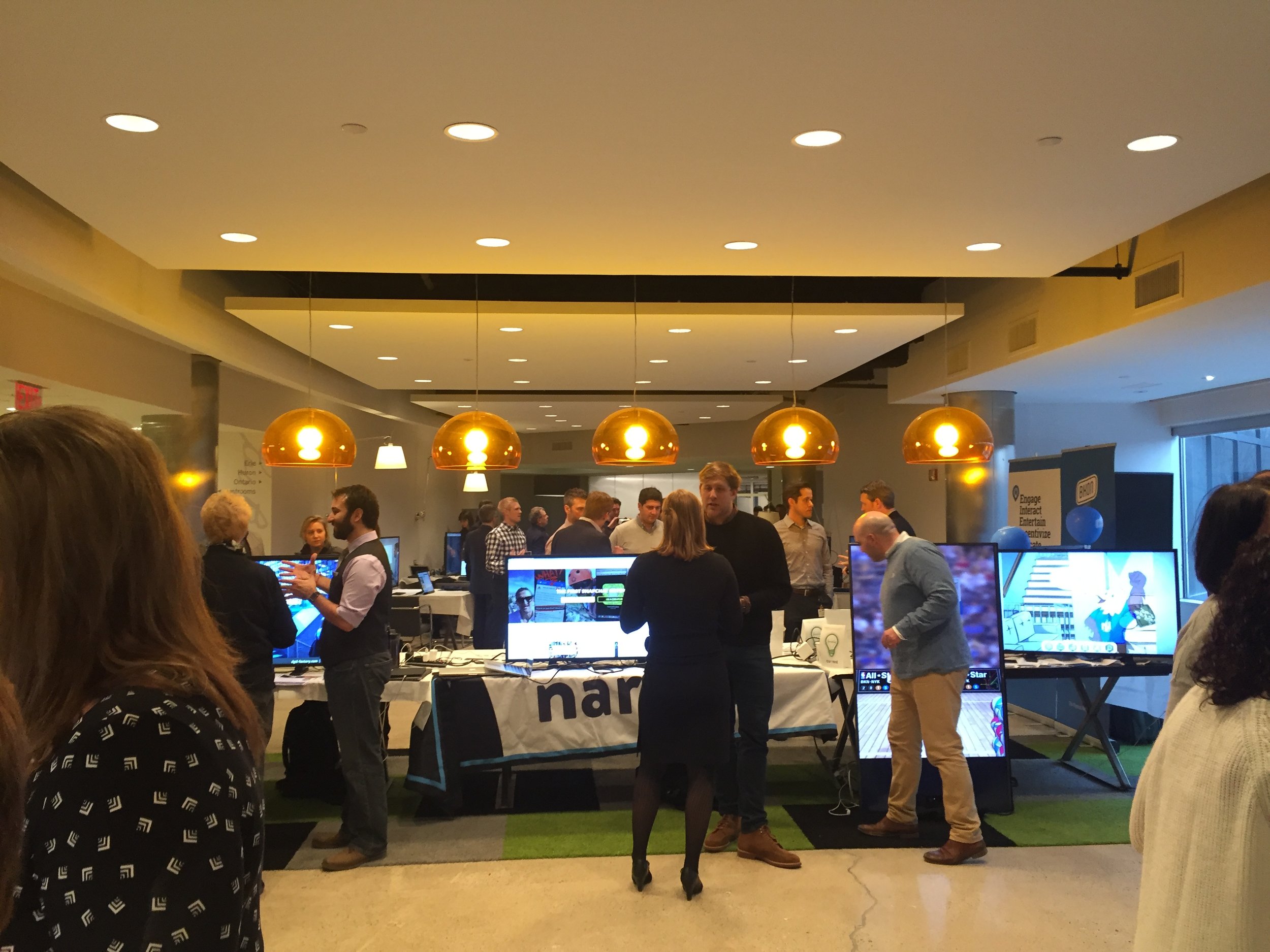
Leovative Detroit, 2016: bringing the content event to our Detroit team and their clients.
The biggest lesson from these years was about focus. Pick one clear theme early and stick with it. That lesson carried straight into how we built the next lab.
Step 5: The Lab on 21 (2018 to 2020)
In February 2018 we opened the Lab on 21. It was a much bigger space with a broader mission. We moved from retail alone to the place where content and commerce meet in advertising, which brought the themes of our Leovative and FutuRetail events together in one room.
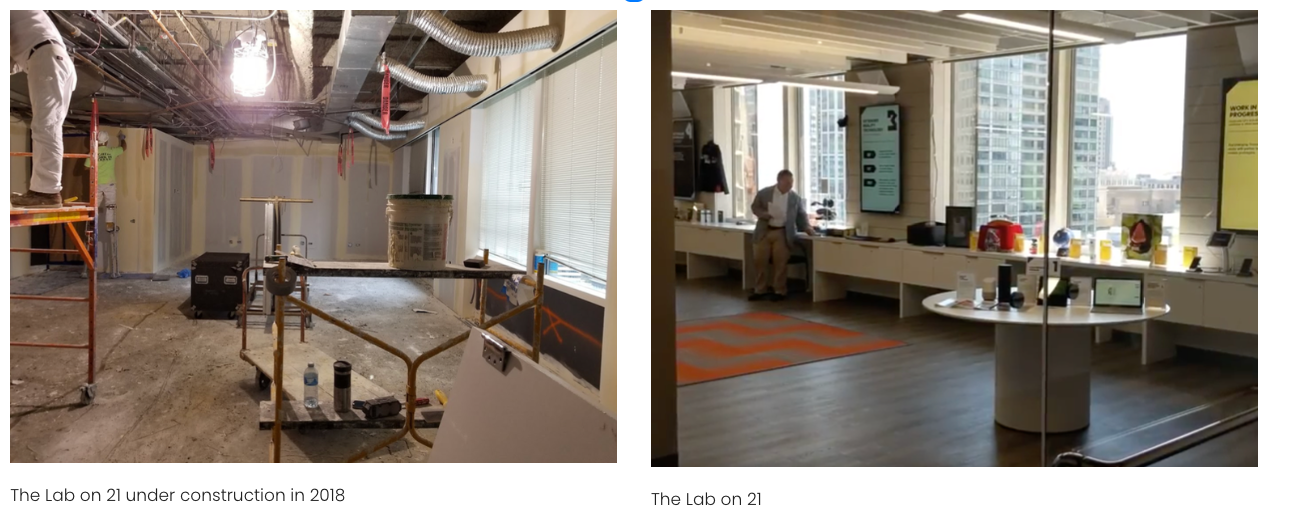
The Lab held more than 50 pieces of technology across five areas: Conversation, Works in Progress, Extended Reality, Frictionless, and Retail. Every area included at least one prototype our Emerging Technology team built. One of them was LC, our "Lab Curator," which worked as a Google Assistant Action, a Facebook Messenger bot, and an ARKit shopping guide. Another was the Redeem Machine, a vending machine that gave you one free snack for every 30,000 steps. More than 400 employees downloaded the app, and we refilled the 400-item machine 10 times in two months.
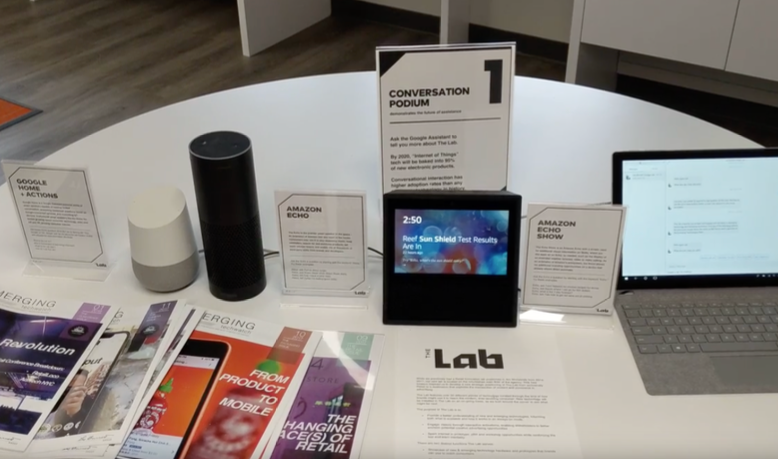
We created a conversational agent, LC, to explain the Lab (in 2018).
Walk through of The Lab on 21
The Value It Brought
By 2019 both labs had paid off in new business. More than 30 brands toured the Lab on 21, including Coca-Cola, P&G, Walmart, Samsung, Google, Kellogg's, Intel, and MillerCoors. The labs turned into real work:
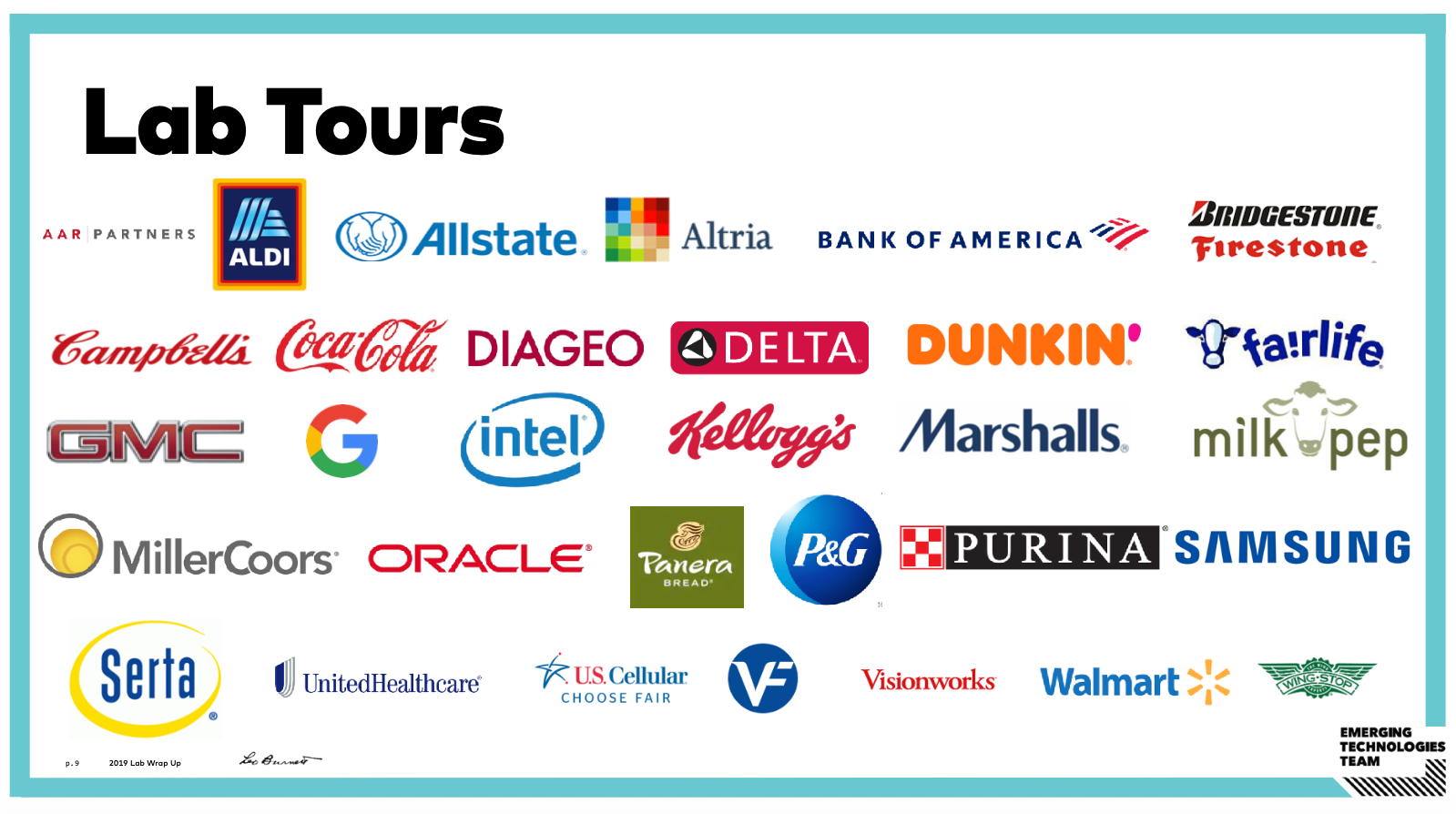
Companies and clients that toured the lab in 2019
Coca-Cola hired us to help build a "Future of Commerce" space inside its KO Lab in Atlanta. We worked alongside their design firm, Gensler. A Coca-Cola shopper marketing leader explained why: "Coke has a great innovation lab and we are looking to build a space within the space to highlight digital innovation. And, of course Arc has already built out a space that does just this! So, why should we recreate the wheel when we could partner with you to help us envision our space to be cool like yours?"
Altria: what we learned about technology and shopper behavior in the Retail Lab shaped an AI-driven mobile loyalty program for Altria that grew to 5 million monthly engagement events. Later, a Lab on 21 tour and workshop with Rokkan led to an unmanned retail kiosk idea for IQOS, using a biometric vending machine from the Lab.
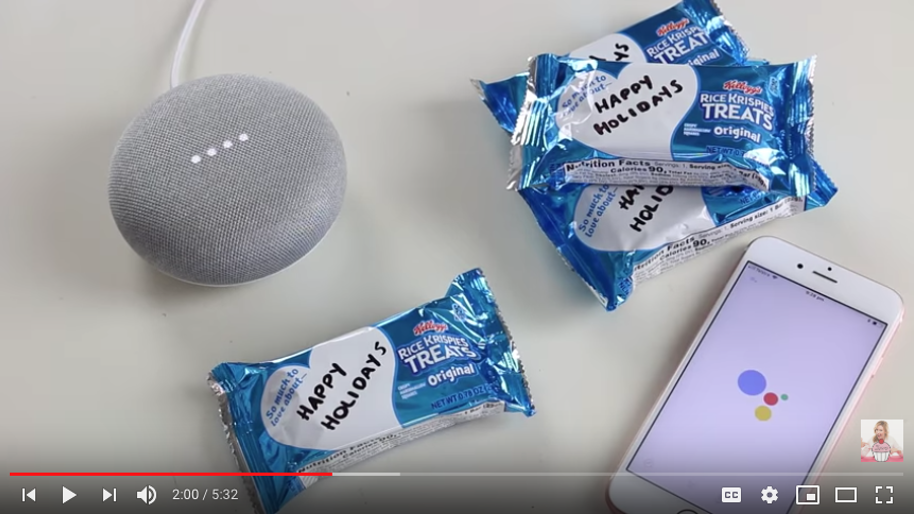
Kellogg's launched Krispie Kitchen for the 2018 holidays. It was the first food brand action on Google Assistant, and the first campaign built in full partnership between Google and Kellogg's. The idea came from the voice demos in the Lab. It came to life through the Google and Leo Burnett partnership, which I led. Families used their voices to make Rice Krispies Treats while listening to holiday stories with narration and sound effects. The treats turned into edible holiday art along the way. Three YouTube creators, My Cupcake Addiction, Trav & Cor, and Daily Bumps, demoed the experience. The whole thing went from sold to launched in 11 weeks. The results:
Over 9 million ad impressions and 1.7 million video views
A 19.6 million reach through the creators
A 6.9% lift in ad recall among parents, and a 3.6% lift in consideration, a metric that is hard to move
Click-through rate more than double the food brand average (0.18% vs. 0.08%)
About 2,500 active users who spent almost two minutes per session, double the one-minute benchmark
Base sales that went up over the holiday period
MillerCoors hired the Emerging Technology team to tackle out-of-stock problems at large retailers. That came straight out of a lab tour. Separately, a digital end cap concept we built with lab technology went live in a store in Texas.
Kraft: we built an Alexa voice prototype for a pitch and ran it live in the room. Arc won the pitch.
We also formed the Innovation Collective, an informal network of innovation and emerging technology leads across the agency's network who shared resources and built prototypes together.
Looking Back
The lab was always where I hoped this would lead. From the early days of the blog, I pictured a permanent space where clients could see and touch what was coming next. The blog built a point of view, and the events built an audience. Each step made the case for the next one.
It wasn't a role anyone handed me. Nothing quite like it had been done at the agency before, so I shaped it as I went. Over time it earned its own budget and grew to about half of my full-time role at Leo Burnett.
Building something new inside a large agency takes patience. There were plenty of moments when the easier path was to keep doing things the way we always had. What stays with me is that leadership kept saying yes. I think they saw it as a bet on where creativity could go, even before any of us knew exactly what it would become. Their willingness to make that bet, year after year, meant a great deal to me and to the team.
The same idea still drives how I work today. Technology only matters when people can see it, try it, and picture what it could do for them. Sometimes the best thing you can do is build that picture early and invite others to see it with you.
Collaborators: Nick Jones, Jim Carlton, Darren Norkett, Joe Duncan, Kevin Babcock, Lisa Gillis, Danny Ryback, Justina Nguyen, Kent Weber, Ben Oberc.