Consolidating a fragmented digital ecosystem at a multi-hospital academic health system
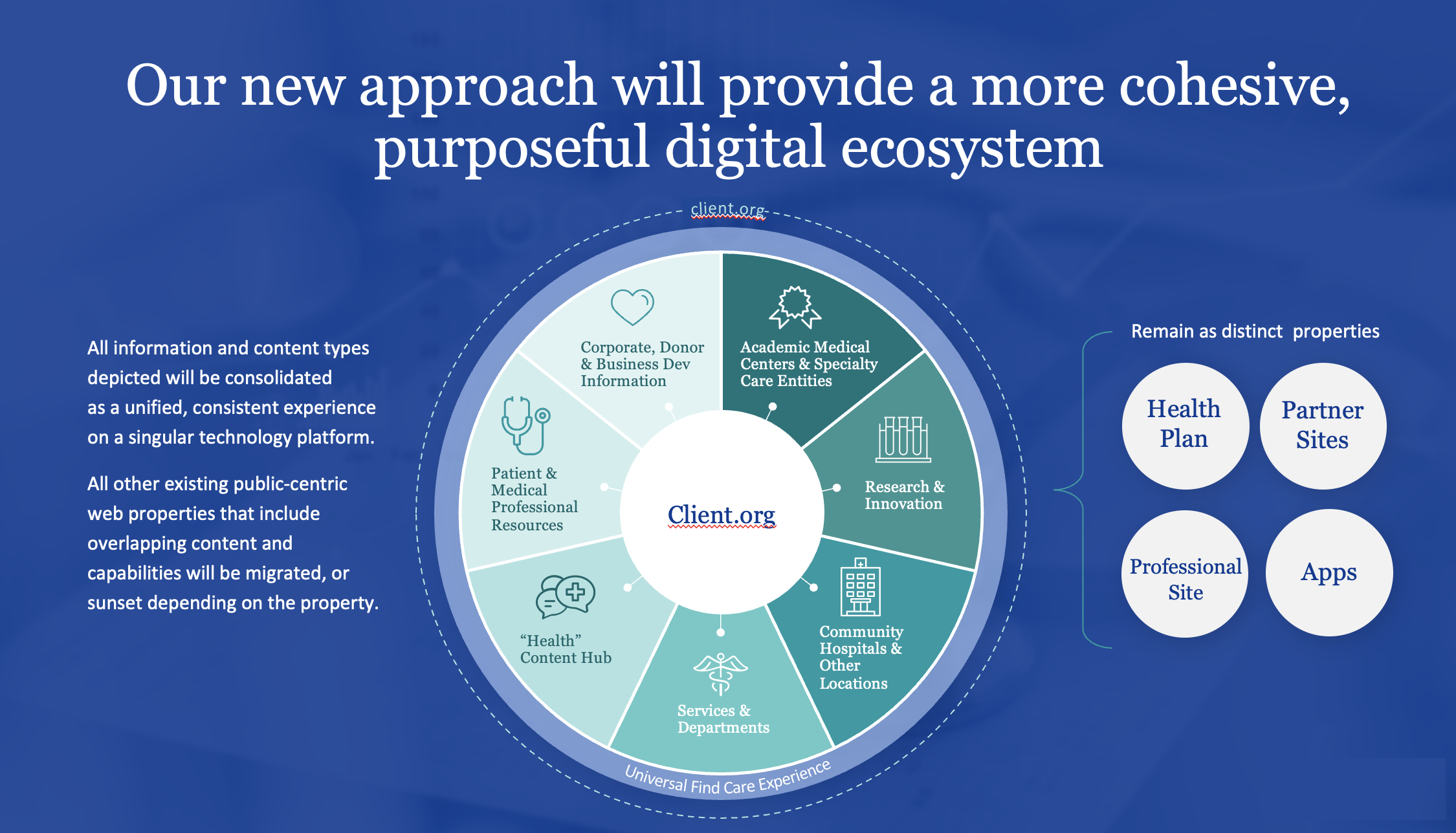
A wheel diagram showing a central "Client.org" hub surrounded by seven consolidated content areas (academic medical centers, research, community hospitals, services, patient resources, and more), with four properties, Health Plan, Partner Sites, Professional Site, and Apps, shown remaining independent alongside it.
While at Perficient, I led the digital strategy engagement for a large academic healthcare system with dozens of hospitals, research institutes, and specialty care entities, each running its own website on its own technology platform. The result was a fragmented patient experience: inconsistent branding, duplicate content competing against itself in search, and no shared way to measure or improve digital performance across the system. I advised the C-suite on a path to a modern, integrated web experience, building the business case, defining the objectives and key results, and evaluating what the future website architecture should actually look like.
The core question was structural: should the organization move to a single unified site, a network of interconnected properties, or keep everything independent. We built a weighted decision framework around the criteria that actually mattered here, brand consistency, patient experience, regulatory and contractual constraints, and cost of change, and used it to recommend a hybrid model: consolidate the majority of digital properties into one system-wide experience, while preserving a small number of sites independently where there was a genuine business, legal, or regulatory reason to do so. That recommendation became the foundation for a multi-year roadmap covering everything from unified UX and content strategy to the underlying technology stack.